To enhance loyalty among regular customers and attract new guests to your dining establishment, you can optimise your website. SEO techniques will boost your platform’s position in search engine rankings and significantly increase your online visibility. However, optimising a website is a multi-stage process that includes both eliminating technical errors and improving the structure and adding quality relevant content that will be highly appreciated by Google and Bing. The team of our Digital Marketing Agency shares the main tips and tricks of online promotion in the sphere of the restaurant business.
What is Restaurant SEO
Optimisation of restaurant, cafe, and catering websites is an important condition for promoting your business. And it has its own specifics. Let’s first understand the terminology. SEO for restaurants is a strategy that focuses on improving an online platform by:
- Content marketing (creating expert high-quality content);
- Attracting new customers;
- Building the reputation of the restaurant/cafe/food delivery service;
- Website performance optimisation (technical SEO);
- Increase in the ranking of search queries;
- Improving the usability of the site;
- Mobile optimisation;
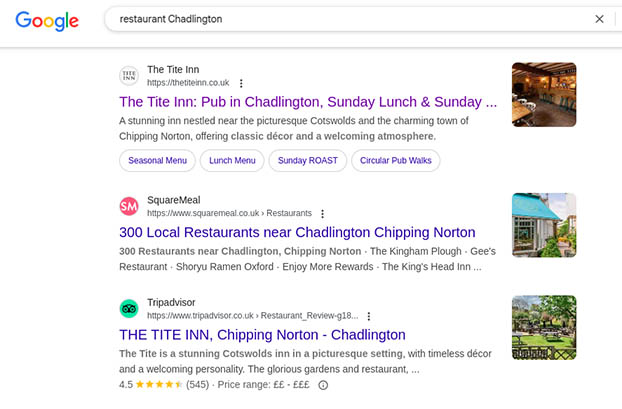
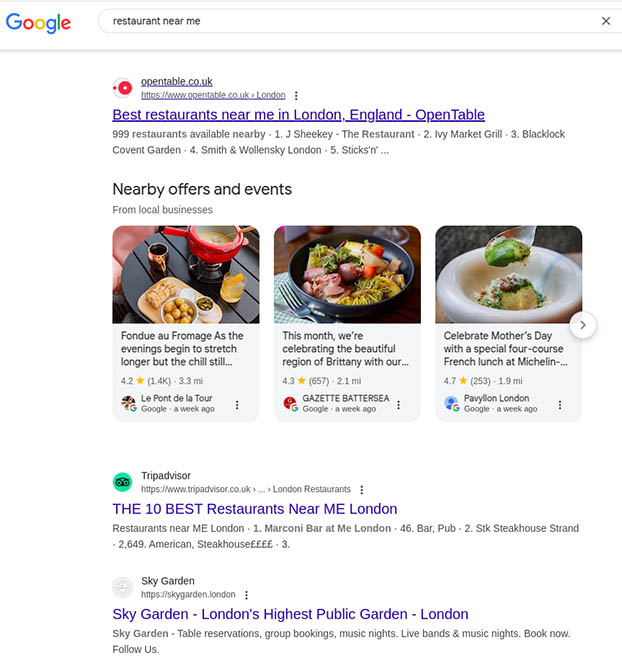
What are the specifics of this niche? The main emphasis is on local SEO. After all, in the case of the food service business, the target audience has a specific and limited geographical location. So, SEO optimisation measures are aimed at attracting users who are within the service area.
Also, an important role is played by the convenience and usefulness of the site. Potential visitors should be able to easily find essential information such as the menu, location, prices, online booking options, and more. To achieve this, you need to adjust the structure of the site, create internal links between pages, add quality SEO content, and eliminate technical errors.
The Benefits of SEO for Restaurants
The food service industry is a highly competitive niche. Attracting new customers and retaining them is no easy task, but website optimisation can help achieve both. What benefits does a business owner gain by ordering SEO service:
- Improving brand reputation. SEO services include working with reviews/ratings/providing customer feedback. Also, thanks to customisation, the platform will achieve a higher position in search rankings – this increases trust among potential visitors. Additionally, optimisation involves improving website structure and content presentation, making your restaurant’s page more professional and trustworthy;
- Increasing customer convenience. More and more often, before visiting a restaurant/cafe or ordering a delivery, people first check the location, photos of the establishment, and the menu online. A quality website, where it is easy to find the information they need, increases the likelihood that they will choose you;
- Attracting new customers. By setting up local SEO, your website will show up in Google/Bing for customers who are nearby and interested in your services (for example, in response to the query “best cafes in Fulham area”, “where to order food delivery in Chicago”, and so on). That is, the search engines will attract exactly your TA;
- Increasing website traffic. Setting up SEO will help elevate your platform to the top positions in search engine rankings, making it more likely that users will visit your site. More website visitors = more customers;
- Saving money on advertising. A proper setup will bring you stable organic traffic. You will be able to reduce the cost of other types of advertising.

What are the types of SEO for restaurants
For SEO optimisation to deliver tangible results, it is necessary to implement a comprehensive set of measures: this includes both changes to the platform itself (from eliminating technical errors to creating optimised and high-quality content) to improving reputation and brand awareness. If you already have a working website, the first step is an SEO audit. It will allow you to:
- Identify key issues;
- Analyse the behaviour of your visitors;
- Define your target audience (TA);
- Evaluate your existing brand reputation;
- Create an individual plan for website optimisation and promotion.
With a comprehensive approach, your niche + main competitors are also analysed. With the help of modern tools and applications, you can study the preferences and main characteristics of their TA. Consider the main types of optimisation/promotion.
On-page SEO for restaurants
This stage focuses on improving the website itself (internal optimisation processes directly on the platform). What steps does this often include:
- Improving the quality/relevance of content. In the first stage, a semantic core (appropriate keywords that visitors will use to search for your site) is collected. In the case of restaurants, the emphasis is on key phrases that are related to the type of cuisine, location, and types of services (e.g. delivery). In the second stage, the content itself is created – description of dishes, list of services, history of the restaurant, seasonal offers, wine list, and so on. In the third stage, headings and subheadings (H1/H2/H3 and so on) and meta tags are optimised. They should also include relevant keywords;
- Improving URLs. Page addresses should be memorable, concise, and clear. Your website should have a well-defined structure and hierarchy, which is essential for both search engine rankings and user experience. In case of launching a new website, SEO experts help you to find the right address for your brand;
- Improving user experience. This includes structuring materials, creating links between pages, refining the design, and so on. The goal is to simplify finding and perceiving information;
- Optimisation of images. They should be of high quality, but at the same time not negatively affect the speed of page loading. Therefore, specialists select the appropriate format and size. Another important step is adding descriptions to images and alternative text.
Off-page SEO for restaurants
This stage focuses on enhancing the reputation/increasing the visibility of your establishment’s website online (i.e., work is carried out beyond your platform). What it includes, if we’re talking about the restaurant business:
- Working with reviews and comments on other platforms (popular options: Google Reviews/TripAdvisor/Yelp, and so on). Correct and professional feedback on comments is important. The greater the online presence and mentions of the website, the better;
- Active management of social networks. An important step is to create pages on Facebook, Instagram, and other messengers. It is necessary to fill them with high-quality visual and textual content, as well as to set up communication with users;
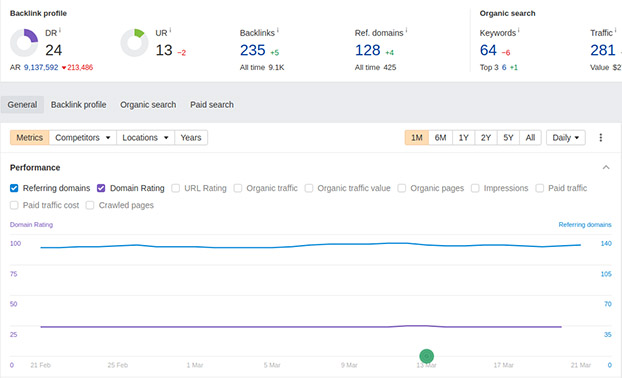
- Posting links to your dining establishment on other websites. It is important to choose reputable platforms for partnerships/advertising. The recommended list includes local food and restaurant websites, food bloggers’ pages, online directories, and so on. You can arrange a mutual link exchange or offer guest posting. Local citations (mentioning the name + address + phone number of your establishment) would be a plus.
Local SEO for restaurants
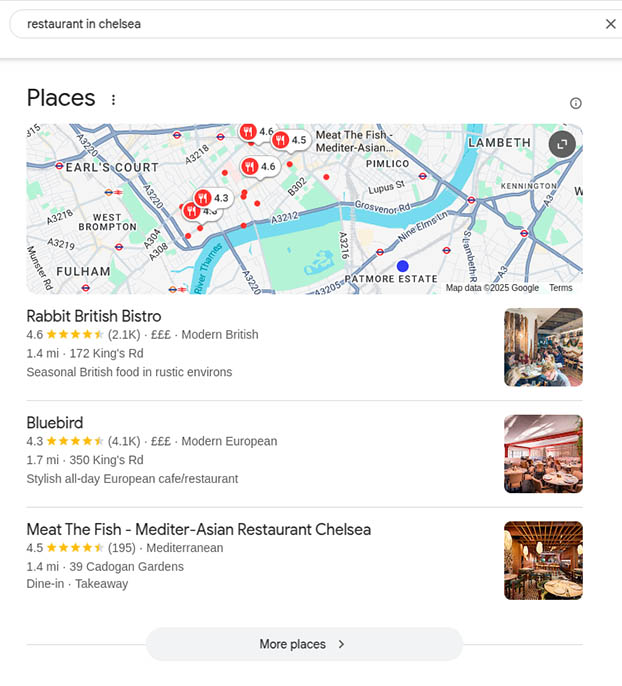
This is one of the most important steps. It specifically helps attract visitors from your region — essentially, the most targeted audience who can become your customers. Here’s how the setup works:
- Incorporate local keywords. These usually contain the name of your region. They’re also often related to location + type of cuisine;
- Increase activity on local forums/sites. For example, your city’s website. Comments, reviews, recipe information, and posting links are good ways to attract targeted traffic to the site;
- Registering and properly optimising your Google My Business profile. This greatly affects the ranking and visibility of the platform.
Technical SEO for restaurants
When ranking sites, search engines also take into account technical aspects. For example, an important role is played by:
- Page load speed. A good indicator: 2-3 seconds;
- Largest Contentful Paint (LCP) measures the time required to render the largest visible content element, such as a hero image or heading. Good LCP score: 2 to 3.5 seconds;
- Time to First Byte (how fast the response comes from the server). Good score: up to 200 milliseconds;
- First Input Delay (how fast the site responds to the first interaction from the user). Good score: up to 100 milliseconds;
- Cumulative Layout Shift (the stability of elements on the page during loading). Good value: up to 0.1.
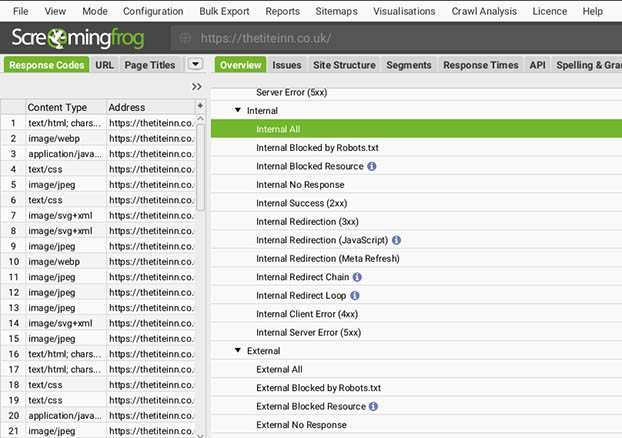
So eliminating technical errors, checking indexability, improving page load speed, and so on is an important stage. Also, technical SEO includes optimisation for mobile devices. The speed and correctness of displaying the site from a phone are often evaluated by search engines and used for ranking.
Restaurant SEO: 10 Tips to Help Your Website Rank
We have collected the top recommendations and life hacks that will help in setting up the site and its effective promotion. Our tips:
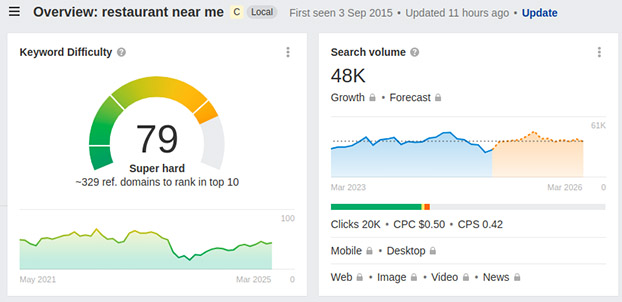
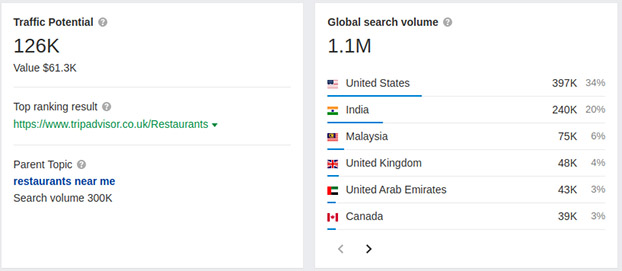
- To select relevant keywords, use such services: SEMrush (can be used to analyse competitors + get all the statistical information about key phrases, Ahrefs (provides detailed analytics), and Moz Keyword Explorer (will help to analyse keywords comprehensively);
- When creating textual content, take into account all the criteria by which websites are ranked in 2025. For example, search engines favour sites with expert and unique content that 100% answers all user questions. Before uploading texts to the site, check them with an AI scanner + plagiarism-checking services;
- Create a profile of the potential target audience. Take into account geographic, demographic, and other factors. Google Analytics is an effective tool. You can also conduct surveys through different services (e.g. SurveyMonkey or YouGov);
- Add FAQs. Such questions/answers have a positive impact on site ranking. Use keywords in them;
- Before you start optimising, it’s worth organising all the information from your analysis. Handy services: Trello (you can create different project cards and conveniently give access to different team members), Notion (a convenient platform for creating notes), and Airtable (passes for creating a variety of tables to organise information);
- Optimise content for voice search. More and more users are using this method to find information. This means that more “conversational” rather than formal content is gaining popularity + key phrases are becoming longer;
- Conduct a thorough analysis of competitors. This will not only help you to choose the right keywords but also to assess user behaviour and avoid mistakes when creating structure and content;
- Test key technical indicators to see how well and correctly your site is working through services such as Google PageSpeed Insights, WebPageTest, Google Lighthouse, GTmetrix, and Pingdom Tools;
- Maximise your social media presence. Research shows that Generation Z is increasingly choosing products/services through social media (Instagram and others). You should emphasise quality visual content on them. The consistency of posts is important;
- Regularly monitor changes in audience behaviour, learn new search engine requirements, and update content. SEO optimisation is not a single adjustment, but an ongoing process.

Ready to Boost Your Restaurant’s Success? Start working with our SEO experts today
Setting up SEO on your own is a complex and time-consuming process. To take all the nuances into account, the most effective solution is often to involve a team of specialists. Our VOLL studio has been involved in SEO optimisation and promotion for over 14 years, and one of our profile niches is Restaurant SEO Services. To find out more details, just email us! We will quickly bring your website to the top and help you attract new customers.
Get a quote for the SEO of your website!
What affects the cost?
- Website type
- Website age
- Information content quality of the website
- Competitiveness of the topic the website is devoted to
- Promotion scale requested by customers
- Region of the website promotion
Our experts will determine the best promotion strategy that can get your website to the TOP in the shortest possible time: